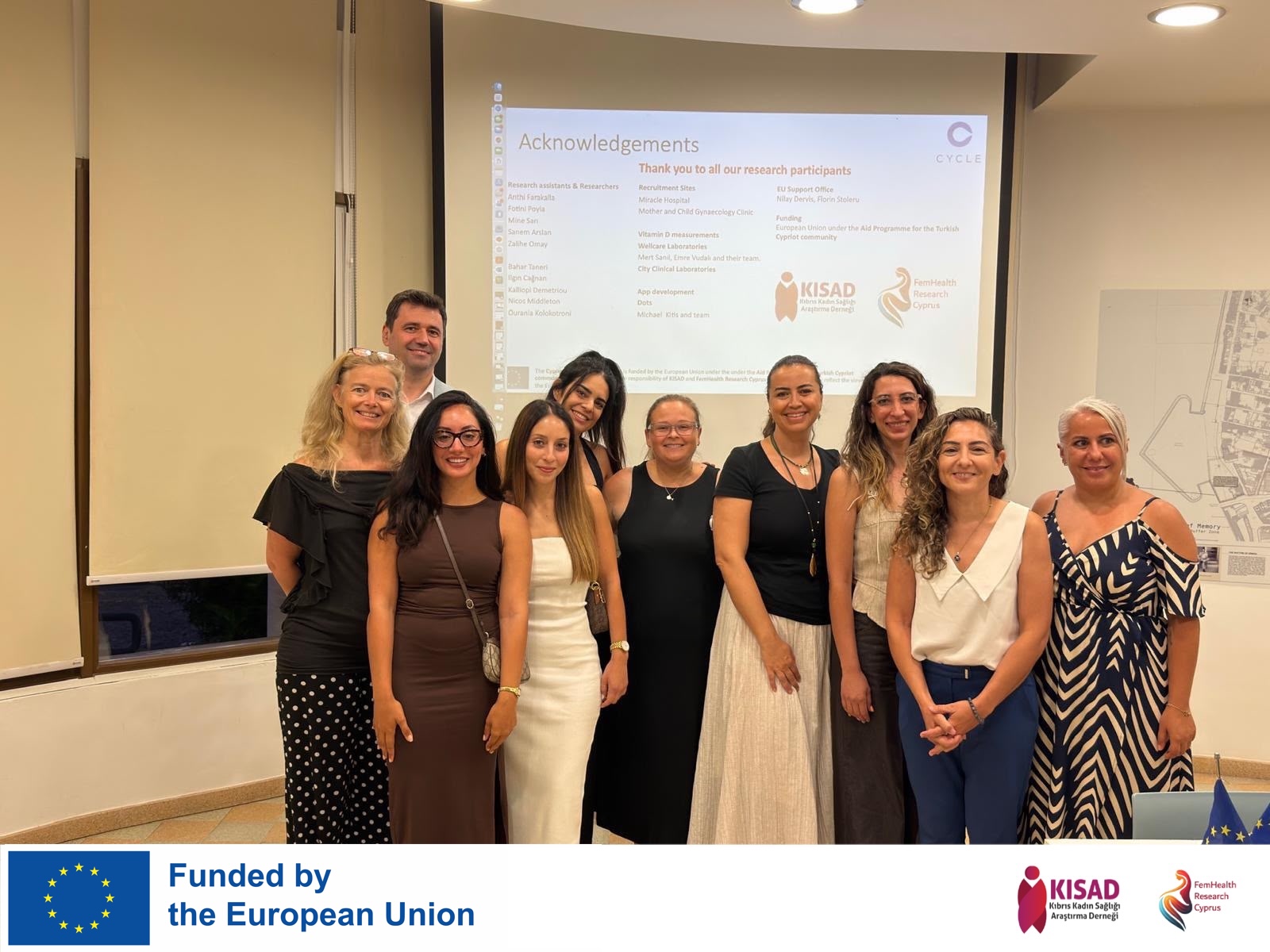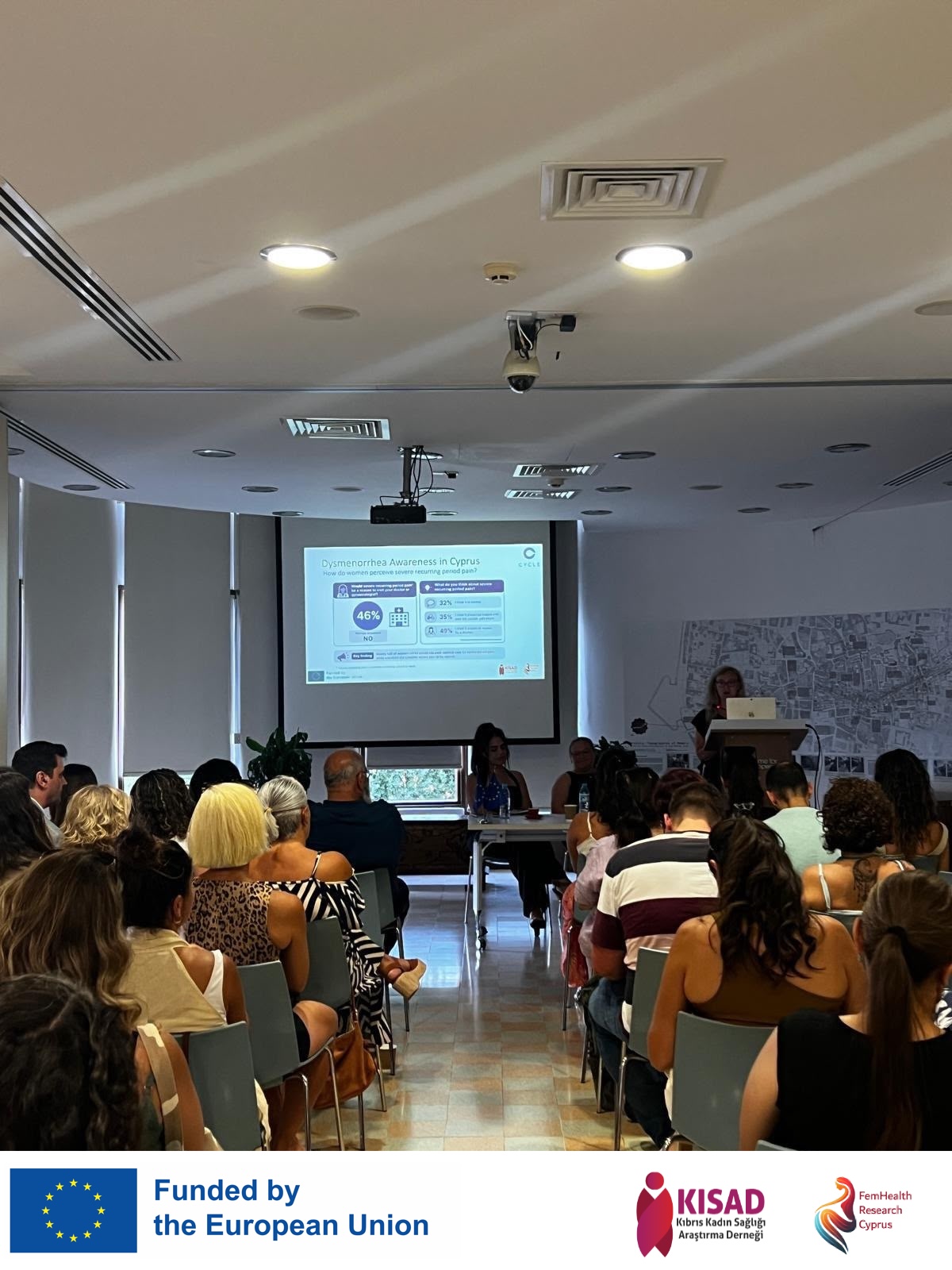
The findings of the Cyprus Period Pain Project, a bi-communal research collaboration between the Cyprus Women’s Health Research Association (KISAD) and FemHealth Research Cyprus, were presented to the public at the project’s closing seminar on 27 July.
Funded by the European Union’s Aid Programme for the Turkish Cypriot community, the project is the first bi-communal studies to investigate the prevalence of period pain (dysmenorrhea), its impact on quality of life, and its relationship with vitamin D levels among women from both communities in Cyprus. The project also aimed to strengthen sustainable scientific collaboration in the field of women’s health across the island.
The study included approximately 1,000 women aged 16–45 from both communities in Cyprus. The findings demonstrated that period pain has a substantial impact on women’s daily lives. Approximately 30% of women experiencing severe period pain reported missing school or work during their last menstrual period, while more than 75% said they had to lie down and rest for part of the day. The study also found that women with severe period pain reported lower quality of life and higher levels of anxiety, fatigue, and pain-related psychological burden.
One of the study’s most striking findings was the lack of awareness surrounding menstrual health. Nearly half of the participants stated that they would not seek medical care even if their period pain was severe enough to prevent them from attending school or work, while approximately 30% believed that this level of pain was normal. These findings suggest that severe period pain continues to be normalised, potentially delaying women from seeking appropriate medical care and negatively impact their quality of life.
As part of the project, participants’ vitamin D levels were measured during both the summer and winter months. The results showed that approximately 70% of women of reproductive age had either deficient or insufficient vitamin D levels. The study found that women experiencing active period pain had lower vitamin D levels than women without period pain. In contrast, no significant association was observed between vitamin D levels and underlying gynaecological conditions such as endometriosis or uterine fibroids, pain during sexual intercourse (dyspareunia), or non-cyclical pelvic pain. These findings suggest that the relationship between vitamin D and period pain may be highly specific and may reflect shared biological mechanisms, particularly those involving inflammation and pain processing.
The researchers emphasised that this was an observational study and therefore does not establish a causal relationship between vitamin D levels and period pain. Randomised controlled clinical trials will now be needed to determine whether improving vitamin D status can reduce period pain symptoms. They also noted that the current classifications of vitamin D as “deficient”, “insufficient” and “sufficient” were developed with bone health in mind, and that the optimal vitamin D levels for menstrual health remain unknown. Future research should therefore aim not only to determine whether vitamin D supplementation can reduce period pain, but also to establish the vitamin D levels that should be recommended to support optimal menstrual health.
Another important outcome of the project was the establishment of the Bi-communal Women’s Health Research Network, which aims to promote research, knowledge exchange and collaborative projects in women’s health. The network will bring together researchers, healthcare professionals, civil society representatives and policymakers to strengthen collaboration and advance women’s health research across Cyprus.
Dr Nilufer Rahmioglu and Dr Lysia Demetriou, Project Co-Leads, said:
“This project was not only a study on period pain, but also an important example demonstrating that scientific collaboration and joint research in women’s health are possible in Cyprus. We are deeply grateful for the support provided by the EU, which made this project possible. Looking ahead, we also hope to see new opportunities that enable researchers from both communities to participate more fully in European research funding programmes. Expanding these opportunities would help strengthen collaborative research and support the generation of scientific evidence that better reflects the health needs of people living across Cyprus. We hope this project marks the beginning of many new collaborative studies in women’s health.”
“This research would not have been possible without the time and commitment of our volunteer participants. We would like to express our sincere gratitude to all the women who took part in the study and to our dedicated project team, whose hard work and commitment made this research possible.”
The Cyprus Period Pain Project was implemented through a partnership between KISAD and FemHealth Research Cyprus and was funded by the European Union’s Aid Programme for the Turkish Cypriot community. Its contents are the sole responsibility of KISAD and FemHealth Research Cyprus and do not necessarily reflect the views of the European Union.